
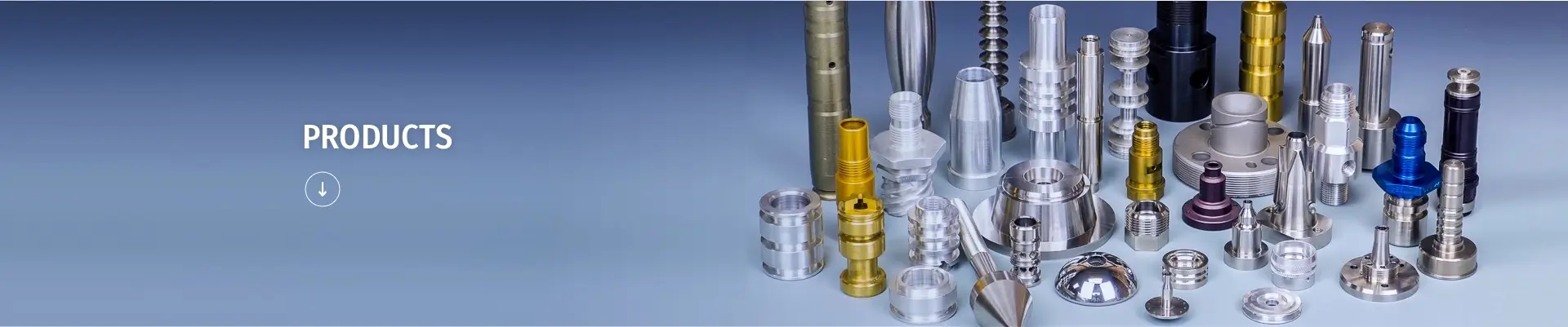

What Are Aluminum CNC Micro Turning Parts
Aluminum CNC Micro Turning Parts refer to extremely small, high-tolerance components manufactured using advanced CNC turning equipment, typically with an outer diameter (OD) less than φ 10 mm. These parts are critical for high-tech sectors, including medical devices, electronics, optical communications, and aerospace.
Micro Turning presents significant challenges beyond standard CNC machining, requiring minuscule cutting forces, exceptional spindle and tool rigidity, and sub-micron dimensional control. JST Industry specializes in the custom manufacturing of precision Custom CNC Micro Turning Parts, leveraging advanced Swiss-Type automatic lathes and micro-level inspection tools. This guarantees superior concentricity, surface finish, and thread accuracy, even on the smallest components.
Aluminum alloy is the material of choice for CNC Micro Turning Parts due to its optimal balance of lightweight properties, high thermal conductivity, and sufficient mechanical strength, making it ideal for high-performance micro-connectors, fiber optic ferrules, and sensor components.
Parameters of Aluminum CNC Micro Turning Parts
| Parameter | Einzelheiten | Anmerkungen/Kundendaten erforderlich |
|---|---|---|
| Herstellungsprozess | Swiss-Type Automatic Turning, Micro Drilling, Milling/Secondary Operations | Swiss-Type lathes are essential for processing high Length-to-Diameter (L/D) ratio Aluminum CNC Micro Turning Parts. |
| Allgemeine Materialien | 6061-T6, 7075-T6, 2024, 5052 (Aerospace Grade/Standard Grade) | 7075 offers maximum strength; 6061 is the standard, versatile choice. |
| Größenbereich (OD) | φ 0.5 mm up to φ 10 mm | |
| Präzisionstoleranz | ±0.01 mm (Standard), down to ±0.005 mm (Ultra-Precision Grade) | Processing and inspection require strictly temperature-controlled environments to maintain micro tolerances. |
| Oberflächenrauhigkeit | Ra 0.4 to Ra 0.8 (Mirror Finish Capable) | High surface finish is critical for functional components like connectors and sealing surfaces. |
| Nachbearbeitung | Cleaning, Anodizing (Clear/Color/Hard Coat), Chemical Conversion Coating (Chromate/Chem Film) | Anodizing enhances corrosion resistance and provides dielectric insulation. |
| Inspektionsausrüstung | High-Magnification Microscopes, Non-Contact Optical Measuring Systems, CMM (Micro Probe) | Non-contact methods are used to prevent damage or distortion to fragile micro components. |
| Delivery Standard | Conforms to client drawings, ISO 9001:2015 Quality Management System |
Why Choose JST's Aluminum CNC Micro Turning Parts
Achieving Nanometric Accuracy in Custom CNC Micro Turning Parts
Our specialized micro turning capabilities provide distinct advantages over standard machining, particularly in the production of complex Aluminum CNC Micro Turning Parts:
Extreme Accuracy (Sub-Micron Control)
Utilizing high-end Swiss-Type lathes combined with advanced tool compensation systems, we consistently achieve tolerances as tight as ±0.005 mm. This guarantees exceptional concentricity and precision in all Custom CNC Micro Turning Parts, foundational for critical sensing and connection applications.
Optimized Lightweighting and Thermal Management
Aluminum's low density makes these CNC Micro Turning Parts the preferred choice for reducing mass in medical implants, UAVs (drones), and wearable tech, while its high thermal conductivity ensures efficient heat dissipation in electronic assemblies.
Advanced Surface Treatment for Durability
To meet demanding environmental specifications, we offer multiple finishing options, such as hard coat anodizing. This process significantly improves the component’s wear resistance, corrosion protection, and dielectric properties.
Expertise in High L/D Ratios
Long, slender micro parts are prone to chatter and deflection. Our Swiss-Type lathes employ a guide bushing that supports the material precisely at the cutting point. This system effectively processes high L/D ratio Aluminum CNC Micro Turning Parts with superior straightness and efficiency.
Non-Contact Quality Assurance
For components this small, traditional contact measurement can cause deformation. We employ high-magnification, non-contact optical measurement systems and videoscopes to ensure every measurement is accurate and the physical integrity of the component remains intact.
Typische Industrieanwendungen
Critical High-Tech Uses of CNC Micro Turning Parts
Custom CNC Micro Turning Parts are the core enablers of miniaturization and high performance across advanced technology sectors.
| Industrie | Spezifische Anwendung | Beispiel Teile | Schlüsselanforderung |
|---|---|---|---|
| Medizinische Geräte | Minimally invasive surgical tools, implants, diagnostic probes | Micro connector shafts, sensor housings, catheter joints | Biocompatibility, Ultra-high precision, Lightweighting. |
| Optical Communications | Fiber coupling and interconnection hardware | Fiber ferrules, connector pins, micro-adjustment screws | Extreme concentricity (micron level), superior surface finish. |
| Electronics & Sensors | Micro-sensor assemblies, MEMS packaging, miniature motors | Shafts, micro nuts, guide pins, standoffs | Lightweight, Thermal conductivity, High-precision thread matching. |
| Aerospace & UAV/Drones | Lightweight navigation systems, micro-actuators | Micro aerospace fasteners, sensor mounts, lightweight bearing components | High strength-to-weight ratio, Corrosion resistance, Reliability. |
| Precision Instrumentation | Metrology, scientific research, high-accuracy calibration | Micro-adjustment knobs, miniature valve components, calibration pins | Extremely tight tolerances, stable mechanical properties. |
Unser Anpassungsprozess
Hochladen & Überprüfen
Senden Sie Ihre Zeichnungen/3D-Dateien ein. Sie erhalten eine kostenlose DFM-Analyse innerhalb von 24 Stunden.
Angebot & Plan
Sie erhalten ein transparentes, detailliertes Angebot und einen Zeitplan für die Produktion.
Produktion und Qualitätskontrolle
Die CNC-Präzisionsbearbeitung beginnt mit der Erstmusterprüfung.
Fertigstellung & Inspektion
Aufbringen der Oberflächenbehandlung und Durchführung der 100%-Qualitätsendkontrolle.
Lieferung & Unterstützung
Die Teile werden sicher verpackt und versandt. Die Dokumentation wird mitgeliefert.
Hilfe-Center
FAQ
Q1: Why is Micro Turning more challenging than standard CNC turning?
A: Machining CNC-Mikro-Drehteile is challenging because: 1) The extremely small size makes cutting forces and vibration highly sensitive to tool wear; 2) Tolerances are often in the micron range, where minor thermal expansion or machine error can lead to rejection; 3) High Length-to-Diameter ratios require specialized support (like a guide bushing) to prevent deflection.
Q2: What are the primary advantages of aluminum for Custom CNC Micro Turning Parts?
A: Aluminum is ideal because it combines lightweight properties (reducing inertia and overall device mass) with high thermal conductivity (excellent heat dissipation). Furthermore, aluminum is easily treated with surface finishes like anodizing, offering superior corrosion resistance and insulation.
Q3: How do you guarantee micron-level tolerances on Aluminum CNC Micro Turning Parts?
A: We ensure accuracy through three critical aspects: 1) Equipment: Use of Swiss-Type lathes equipped with high-resolution encoders; 2) Environment: Machining conducted within strictly temperature-controlled and clean environments; 3) Inspection: Utilization of high-magnification, non-contact optical measuring systems for full dimensional inspection, preventing distortion caused by contact probing.
Q4: What is a Swiss-Type lathe and how does it benefit micro turning?
A: A Swiss-Type automatic lathe is specifically designed for long, slender CNC Micro Turning Parts with high L/D ratios. It uses a “guide bushing” that holds the material right next to the cutting tool. This increases rigidity significantly, effectively preventing vibration and bending during the machining of small, long components.
Q5: What special aluminum alloys and treatments do you offer for critical applications (e.g., aerospace)?
A: For aerospace, we frequently use high-strength 7075 aluminum, often finished with chemical conversion coatings (such as Alodine) that meet MIL-SPEC standards. For medical devices, we prioritize material biocompatibility and ensure ultra-clean surfaces through specialized ultrasonic cleaning processes.
Leitfäden, die Sie brauchen könnten
The Ultimate CNC Material List: A Complete Guide to Choosing Materials for CNC Machining
Introduction Every CNC machined part begins as raw stock. That stock might be a bar of aluminum destined to become a drone component, a sheet of PEEK slated for a
Wie Sie das richtige CNC-Fräsmaterial für Ihr Projekt auswählen
Die Materialauswahl erfolgt in einem frühen Stadium des Entwurfsprozesses, aber ihre Auswirkungen ziehen sich durch alle nachfolgenden Schritte. Die falsche Wahl zeigt sich in Teilen, die zu viel kosten und sich zu schnell abnutzen,
7 wichtige Fragen bei der Auswahl eines CNC-Fräsdienstleisters
Eine Maschinenwerkstatt zu finden ist nicht schwer. Aber die richtige zu finden? Das ist eine ganz andere Herausforderung. Im Internet findet man innerhalb von Minuten Dutzende von Angeboten, die alle mit wettbewerbsfähigen Preisen, Qualitätsarbeit und


 DE
DE  EN
EN  FR
FR  RU
RU  ES
ES  IT
IT  AR
AR  JA
JA