
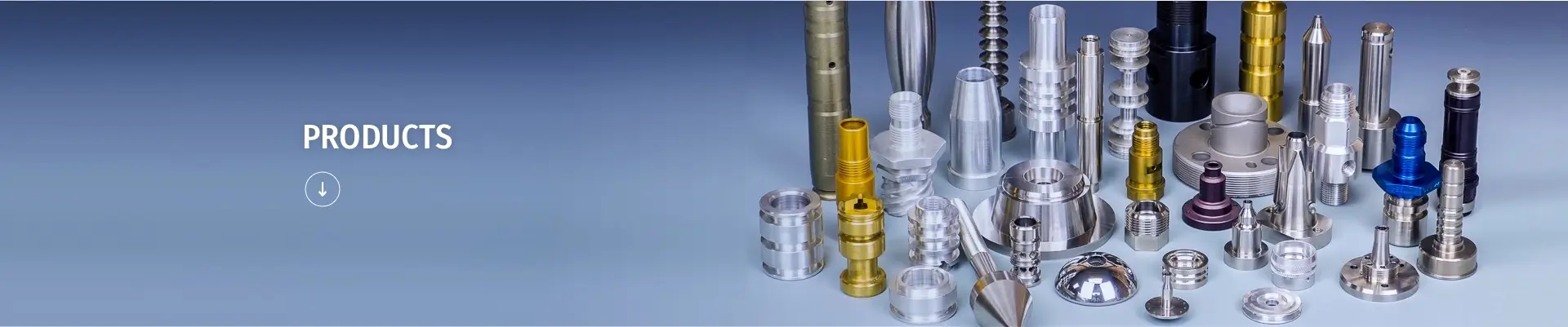
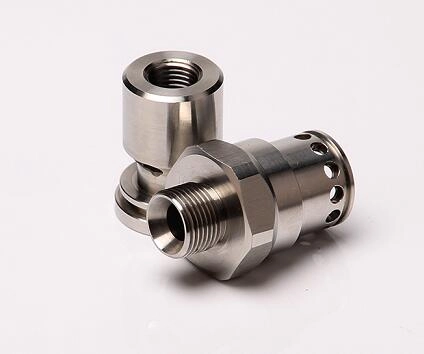
What Are OEM Milling Stainless Steel CNC Turned Parts?
OEM фрезерование нержавеющей стали CNC токарные части are high-precision, multi-process components designed for seamless integration into larger assemblies. As the name implies, these parts begin as Stainless Steel CNC Turned Parts, created on CNC lathes to establish primary cylindrical geometries, concentricity, and threads. They subsequently undergo precise CNC milling operations to add flats, slots, holes, pockets, or intricate contours that cannot be achieved by turning alone. Manufactured under strict OEM protocols, these parts guarantee consistency, traceability, and performance that meet or exceed your exact specifications for fit, function, and durability in demanding applications.
Параметры токарных деталей с ЧПУ из нержавеющей стали
Our manufacturing capabilities for OEM Stainless Steel CNC Turned Parts are defined by the following precision parameters and material expertise.
| Категория параметров | Детали и характеристики | |
|---|---|---|
| Combined Processes | Primary: Precision CNC Turning | Secondary: 3/4/5-Axis CNC Milling, Drilling, Tapping. |
| Standard Stainless Grades | 303 (Optimal Machinability), 304/304L (General Purpose), 316/316L (Marine & Chemical), 17-4PH (Precipitation Hardening), 416 (Martensitic). | |
| Standard Turning Tolerance | ±0.013 mm | Critical Milling/Dimensional Tolerance: ±0.02 mm. |
| Шероховатость поверхности (Ra) | Turned Surfaces: 1.6 μm | Milled Surfaces: 3.2 μm (Can be improved with finishing). |
| Основные возможности фрезерования | Cross-holes, flat surfaces, keyways, splines, off-center pockets, engraved markings. | |
| Доступные варианты отделки | Passivation, Electropolishing, Bead Blasting, Vibratory Finishing, Plating (Ni, Cr). | |
| Качественная документация | Material Certs (3.1), First Article Inspection (FAI) Reports, Full Dimensional Reports, PPAP Support Available. | |
Почему стоит выбрать токарные детали с ЧПУ из нержавеющей стали от JST?
Выбор JST Industry гарантирует превосходное качество, высокую надежность и исключительный сервис. Токарные детали из нержавеющей стали, изготовленные на станках с ЧПУ, обладают неоспоримыми преимуществами:
Integrated Turn-Mill Manufacturing
We streamline your supply chain by performing both turning and milling operations in-house, ensuring perfect alignment between features and reducing lead times for complex OEM Stainless Steel CNC Turned Parts.
OEM-Focused Quality & Consistency
Our processes are built for repeatable, batch-to-batch consistency. We provide full traceability and inspection reports tailored to OEM requirements, ensuring every part meets your print.
Expertise in Stainless Steel Machinability
We select and machine the optimal stainless grade (like free-machining 303 or corrosion-resistant 316) to balance performance with production efficiency and cost for your specific application.
Design for Manufacturability (DFM) Support
Our engineers collaborate with your team to optimize part design for the combined turn-mill process, suggesting adjustments that enhance durability, reduce cost, and improve manufacturability without compromising function.
Scalable Production Capacity
Whether you need prototypes, pilot runs, or sustained high-volume production, our flexible manufacturing setup is designed to scale with your program’s needs, ensuring reliable JIT delivery.
Типичные промышленные применения
The precision and versatility of our Stainless Steel CNC Turned Parts with secondary milling make them ideal for critical sub-assemblies across diverse OEM sectors.
| Промышленность | Примеры применения (конкретные компоненты) |
|---|---|
| Fluid Handling & Valves | Valve stems with flattened actuator ends, pump shafts with keyways or cross-drilled holes, manifold blocks with port connections, sensor housings with mounting brackets. |
| Производство продуктов питания и напитков | Mixer shafts with paddle attachment flats, fitting bodies with side ports, sanitary clamp ends with machined grooves, conveyor roller axles with bearing seat flats. |
| Medical Device Manufacturing | Surgical tool handles with textured grips (milled), adjustment knobs with dial markings, connector bodies with alignment slots, implant driver shafts with hex drives. |
| Automotive Subsystems | Fuel system components with mounting flanges, sensor fittings with wire exit ports, transmission linkages with pin holes, brake system pistons with groove features. |
| Electronics & Industrial Automation | Connector bodies with complex interfacing geometry, robotic end-effector fingers, guide rods with slots for sensor triggers, motor mounts with precision locating features. |
Наш процесс персонализации
Загрузка и обзор
Отправьте ваши чертежи/3D-файлы. Получите бесплатный анализ DFM в течение 24 часов.
Цитата и план
Получите прозрачное, подробное предложение и график производства.
Производство и контроль качества
Прецизионная обработка с ЧПУ начинается с контроля первых деталей.
Отделка и контроль
Нанесите поверхностную обработку и проведите окончательную проверку качества 100%.
Доставка и поддержка
Детали надежно упакованы и отправлены. Предоставляется документация.
Центр помощи
ЧАСТО ЗАДАВАЕМЫЕ ВОПРОСЫ
Q1: What is the main advantage of combining turning and milling for a single part?
A: The primary advantage is achieving complex geometries in one seamless workflow. A part can be turned for perfect roundness and concentricity, then immediately milled to add off-axis features. This ensures higher accuracy between features, reduces handling and logistics costs, and simplifies quality control, which is crucial for OEM Stainless Steel CNC Turned Parts.
Q2: Can you work with our proprietary stainless steel alloy or specific material certification?
A: Absolutely. As an OEM partner, we are accustomed to sourcing materials to specific mill certifications or proprietary alloys. Please provide the material specification (e.g., AMS, ASTM, or internal spec) and certification requirements (e.g., 3.1 or 3.2) with your RFQ.
Q3: What information do you need to provide a quotation for such a component?
A: To provide an accurate quote for OEM Stainless Steel CNC Turned Parts, we need: 1) Complete 2D drawings (PDF/DWG) with all dimensions, tolerances, and GD&T callouts; 2) Material specification; 3) Target annual volumes; 4) Any required surface finishes or special packaging. 3D models (STEP) are highly beneficial for complex parts.
Q4: How do you ensure the concentricity between the turned body and the milled features?
A: We maintain concentricity through precision fixturing and process planning. Often, we design custom fixtures that locate on the turned diameters to machine the milled features in the same setup or on a transfer machine, guaranteeing the relationship between features is held to the tight tolerances required for OEM applications.
Q5: What is your typical process for qualifying a new OEM part?
A: Our standard qualification process includes: 1) DFM review and quote; 2) Production of initial samples for approval; 3) Submission of First Article Inspection (FAI) report per AS9102 or customer format; 4) Upon sample approval, we proceed to pilot run and then full-scale production, with Statistical Process Control (SPC) implemented as needed.
Руководства, которые могут вам понадобиться
The Ultimate CNC Material List: A Complete Guide to Choosing Materials for CNC Machining
Introduction Every CNC machined part begins as raw stock. That stock might be a bar of aluminum destined to become a drone component, a sheet of PEEK slated for a
Как выбрать подходящий материал для фрезерования с ЧПУ для вашего проекта
Выбор материала происходит на ранних этапах проектирования, но его влияние сказывается на всем последующем. Неправильный выбор проявляется в виде деталей, которые стоят слишком дорого, изнашиваются слишком быстро,
7 ключевых вопросов при выборе партнера по фрезерной обработке с ЧПУ
Найти механическую мастерскую несложно. А вот найти правильный? Это совсем другая задача. Интернет в считанные минуты предлагает десятки вариантов, каждый из которых заявляет о конкурентоспособных ценах, качественном исполнении и




 RU
RU  EN
EN  DE
DE  FR
FR  ES
ES  IT
IT  AR
AR  JA
JA