خدمة التصنيع الآلي الدقيق

JST Precision Machining Service is a professional manufacturing service designed to produce high-precision, high-quality parts and assemblies.
 

Capabilities of JST Precision Machining Service

JST uses advanced mechanical equipment and precision processing technology to meet customers’ strict requirements for part size, shape and surface quality. Precision machining services usually use CNC machine tools (such as CNC milling machines, CNC lathes, CNC grinders, etc.) for processing to ensure that the parts can meet the customer’s accuracy requirements. These CNC machine tools can automatically perform complex machining operations according to pre-programmed instructions, ensuring the geometric dimensions, surface finish and shape accuracy of parts.

What is Precision Machining?

Precision machining is a subtractive manufacturing process where computer-controlled machine tools remove material from a workpiece to create parts with extremely high dimensional accuracy, complex geometries, and superior surface finishes. At JST, our precision CNC machining services utilize a suite of advanced equipment—including multi-axis CNC milling machines, CNC lathes, CNC grinders, and mill-turn centers—all operating under pre-programmed instructions. This ensures every component meets exact specifications for geometry, tolerance, and surface quality. We specialize in producing mission-critical parts for industries where failure is not an option, such as aerospace, automotive, medical devices, and precision optics.

خدمة التصنيع الآلي الدقيق

Precision Machining Technology We Provide

التفريز باستخدام الحاسب الآلي الرقمي

التفريز باستخدام الحاسب الآلي الرقمي

CNC milling is a common CNC machining technology that is automated through CNC milling machines.
It is suitable for processing plane, curved surface, holes and other shapes of parts, and can realize high precision and high efficiency.
CNC milling usually includes vertical milling, vertical and horizontal rotary table milling, gantry milling and other forms, which can meet the needs of different shapes and sizes of parts processing.

الخراطة باستخدام الحاسب الآلي الرقمي

CNC turning is a technology that utilizes CNC lathes for automated machining and is suitable for machining rotationally symmetrical parts.
It can realize high-precision outer and inner diameter machining, including turning, boring, countersinking, thread turning and other operations.
CNC turning is commonly used for machining shaft parts, sleeve parts, nut parts and so on.

JST can process parts samples through CNC turning technology. These samples may include different types of parts such as outer diameter processing, inner diameter processing, thread processing, etc. At the same time, we have rich processing capabilities and experience, such as shaft parts, sleeve parts, nut parts, etc.

الخراطة باستخدام الحاسب الآلي الرقمي
Precision Grinding

Precision Grinding

Precision grinding is a technology that utilizes grinding tools to process workpieces with high precision.
It can realize highly accurate control of the size, shape, and surface quality of the parts, and is usually used for processing parts with high hardness and high precision requirements.
Precision grinding usually includes flat grinding, external grinding, internal grinding, surface grinding, and other forms.

JST processes part samples through precision grinding technology. These samples may include parts with flat surfaces, precise dimensions, and complex shapes. In terms of processing capabilities, we have different forms of precision grinding processing capabilities and quality control levels such as surface grinding, cylindrical grinding, internal cylindrical grinding, and surface grinding.

Turning-Milling Compound Machining

Mainly using CNC precision automatic lathes or turning-milling compound equipment, it can complete compound processing such as turning, milling, drilling, boring, tapping, and engraving at one time, mainly used for batch processing of precision hardware, shaft-type non-standard parts.

JST uses state-of-the-art CNC precision automatic lathes or mill-turning equipment, which are capable of turning, milling, drilling, boring, tapping, engraving, and other processes in a single pass to meet your processing needs for complex parts. This technology is mainly used for batch machining of precision hardware parts, non-standard parts, and so on. With our Turning-Milling Compound Machining, you can get parts with complex contours, high precisio,n and quality.

Turning-Milling Compound Machining
التصنيع الآلي الدقيق

التصنيع الآلي الدقيق

Micro-machining refers to the processing of small workpieces. Micro-machining is commonly used in the fields of medical devices and electronics. Parts produced by micro-machining processes often require observation using a microscope. The diameter of the tools used for micro-machining can be as small as 0.001 inches. Micro-machining technology is a very flexible process that can produce complex shapes of micro-components.

Micromachining is one of our specialties in the medical device and electronics fields. We use micromachining technology to machine small workpieces, which often require extreme precision and meticulous finishing. Using state-of-the-art equipment and processes, we are able to machine tiny, high-precision parts with tool diameters as small as 0.001 inches. With our Micro Machining technology, you can obtain micro-sized, high-precision parts that have a wide range of applications in areas such as medical devices and electronic equipment.

All Precision Machining Materials Parameter

No.الموادDescription
11018 SteelGeneral purpope 1018 steel is the most prominent of the carbon steels. The low carbon content makes this steel ductile and suitable for forming and welding.
2Alloy Steel 4140Additional chromium makes this steel corrosion and fracture resistant.
3Aluminum 2024-T32024 aluminum is used when a high strength-to-weight ratio is required, such as for gears, shafts and fasteners. It is nonmagnetic and heat treatable.
4Aluminum 5052Corrosion resistant aluminum frequently used in sheet metal applications.
5Aluminum 6061-T6Aluminum 6061 is easily machined and lightweight, perfect for prototypes, military and aerospace applications.
6Aluminum 6063-T5Commonly used outdoors as architectural trim, railings, and door frames, 6063 aluminum has better machinability than 3003. It is nonmagnetic and heat treatable.
7Aluminum 7075-T6Harder and higher strength aluminum alloy good for high-stress parts.
8ASTM A36General purpose, hot rolled steel plate. Great for structural and industrial applications.
9Brass C360A highly machinable brass. Great for prototyping gears, fittings, valves and screws.
10Copper 101Commonly known as Oxygen-Free Copper, this alloy is great for electrical conductivity.
11Stainless Stee 17-4A high strengh, corrosion resistant stainless alloy. Easily heat treatable. Typically used in medical equipment.
12Stainless Steel 303A machinable, corrosion-resistant material.
13Stainless Steel 304A machinable, corrosion-resistant material.
14Stainless Steel 420Contains more carbon than stainless 410 to give it increased hardness and strength when heat treated. Offers mild corrosion resistance, high heat resistance, and improved strength.
15Titanium Grade 2High strength, low weight, and high thermal conductivity. Ideal for applications in the aerospace and automotive industries.
16Zinc Sheet Alloy 500Continuous-cast alloy. Has good electrical conductivity and is highly resistant to corrosion. This alloy is readily treatable for painting, plating and anodizing.
17Acetal (White/Black)Acetal resin with good moisture resistance, high wear-resistance, and low friction.
18Acrylic (PMMA)A clear glass-like plastic. Good wear and tear properties. Great for outdoor use.
19Black ABSHigh strength engineering plastic, used for many commercial products.
20Nylon 6/6Offers increased mechanical strength, rigidity, good stability under heat and/or chemical resistance.
21PEEKOffering excellent tensile strength, PEEK is often used as a lightweight substitute for metal parts in high-temperature, high-stress applications. PEEK resists chemicals, wear and moisture.
22Polycarbonate (PC)A clear or colored, light-weight, glass-like plastic than can be machined.
23PTFE (Teflon)This material surpasses most plastics when it comes to chemical resistance and performance in extreme temperatures. It resists most solvents and is an excellent electrical insulator.

Surface Finishes for Precision Machining Parts

As-Machined

As-Machined

Default surface from CNC; visible tool marks; roughness set by tool & parameters
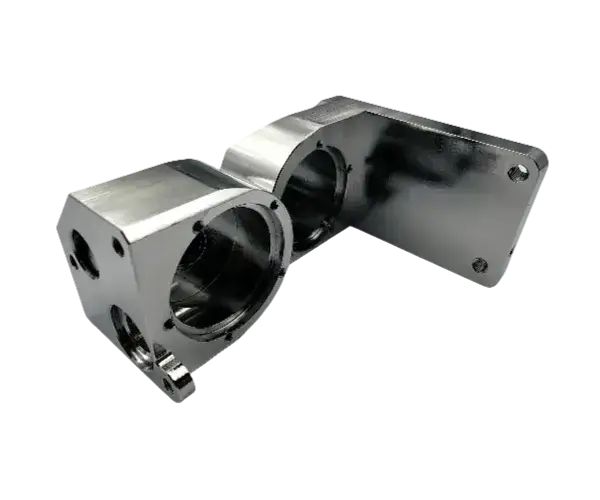
Smooth

Smooth

Abrasive tools/media remove top layer, reducing roughness & imperfections
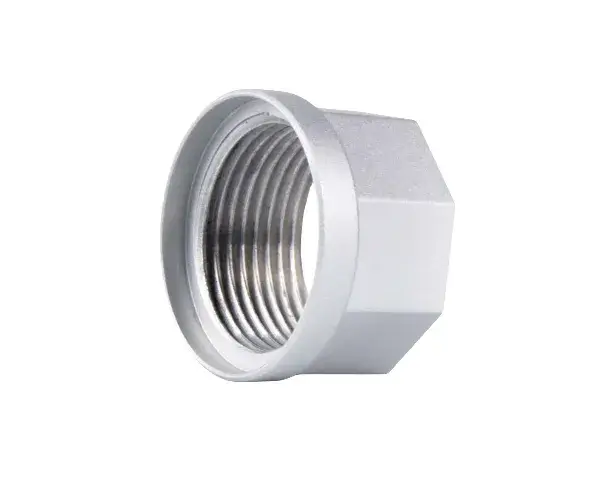
Bead Blasting

Bead Blasting

Fine glass beads/media create smooth matte/satin finish; removes tool marks

Anodizing

Anodizing

Electrochemical thickening of natural Al oxide; clear or dyed; adds corrosion resistance
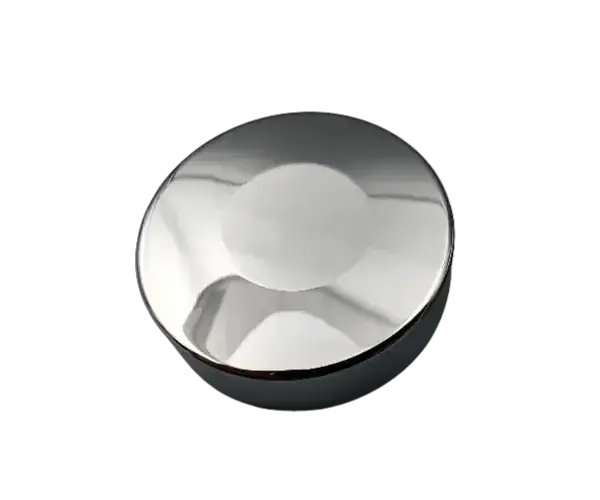
Polishing

Polishing

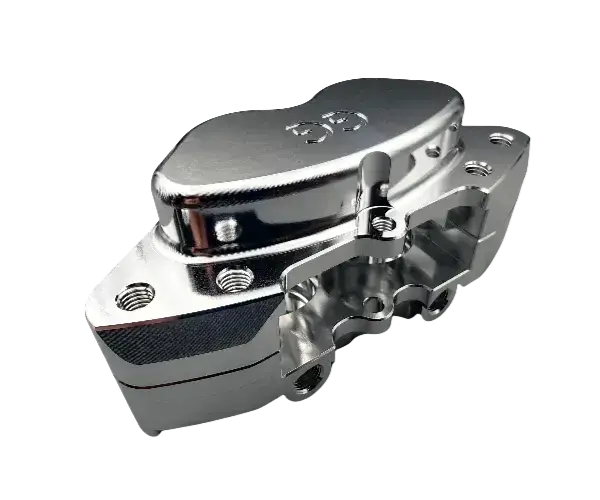
Mechanical removal of material to create smooth/glossy or mirror-like surface
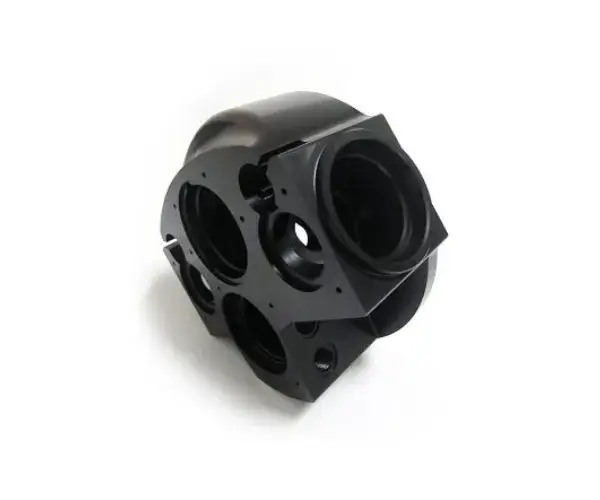
Powder Coating

Powder Coating

Dry powder applied electrostatically & cured; durable, uniform, protective layer

Brushing

Brushing

Abrasive belts/brushes produce uniform directional texture; satin/matte look
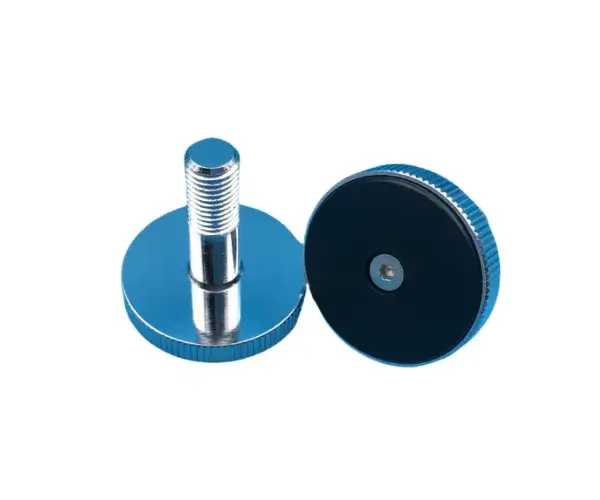
Electroplating

Electroplating

Blast with fine glass beads/media, removes tool marks & surface imperfections; mooth, matte, satin finish

Passivation

Passivation

Chemical treatment for stainless/metals; removes free iron, enhances corrosion resistance
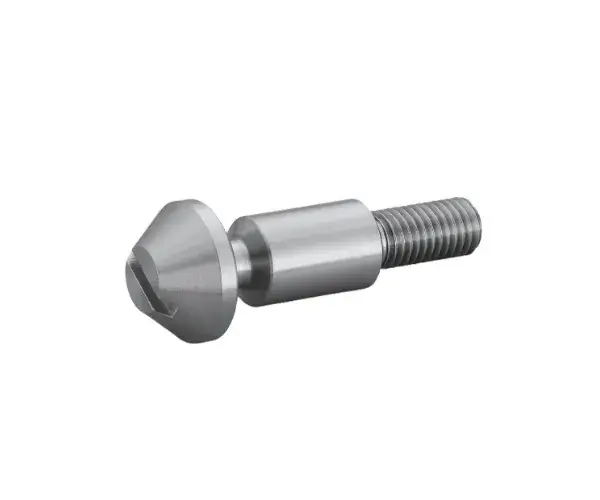
Heat Treating

Heat Treating

Heating & cooling to alter hardness/strength/toughness; hardens outer layer
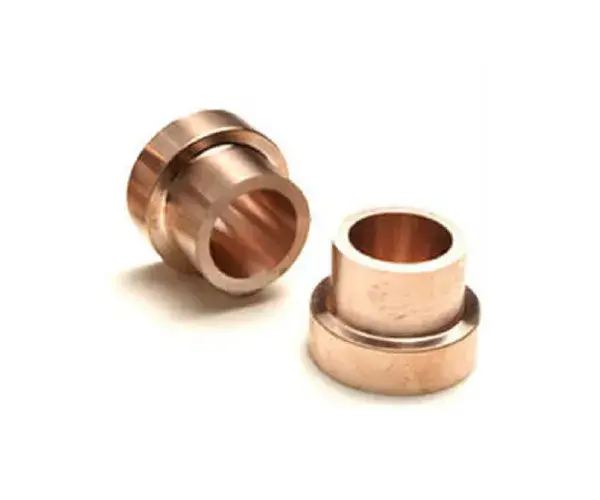
Electropolishing

Electropolishing

Electrochemical removal smoothes & brightens; high-gloss, reflective; improves corrosion res.
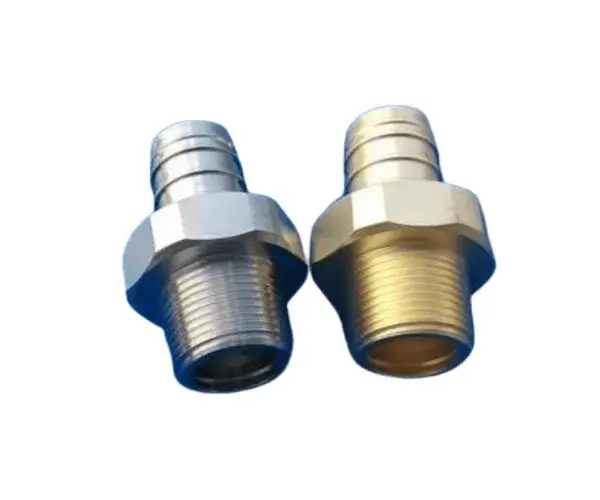
Chromating

Chromating

Chemical conversion coating on Al; provides corrosion resistance & paint primer

Sandblasting

Sandblasting

Abrasive media (sand, Al₂O₃, etc.) cleans/textures; rougher than bead blasting
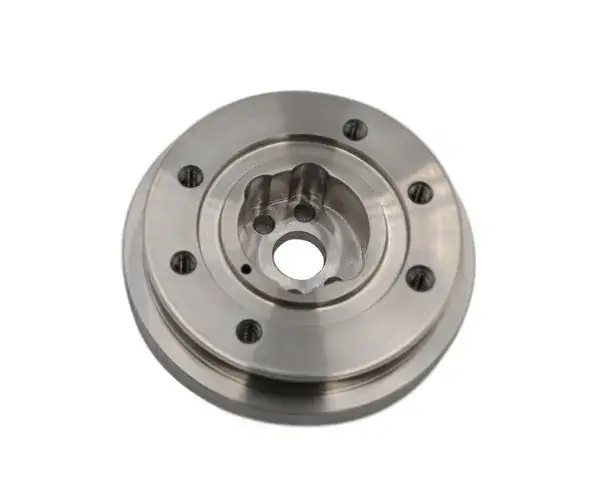
Tumbling

Tumbling

Vibratory finishing with abrasive media; polishes, deburrs, smooths complex/small parts
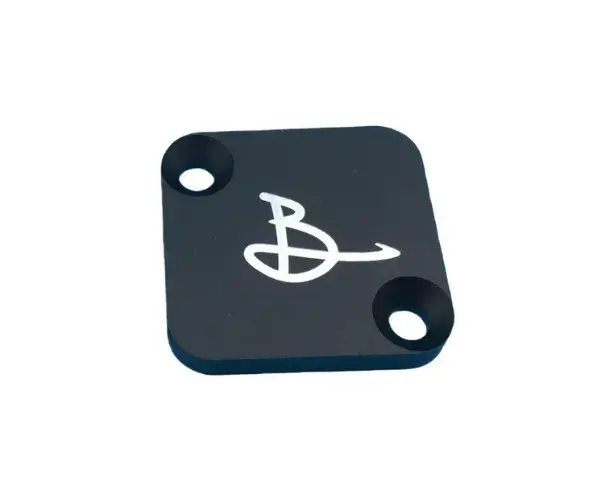
Laser Engraving

Laser Engraving

Laser beam etches permanent markings (logos, text, serial numbers); no overall finish change

Black Oxide

Black Oxide

Chemical coating on steel yields black matte finish; moderate corrosion & glare reduction

Precision Machining Process

JST’s systematic precision machining approach ensures reliability, quality, and transparency from concept to delivery.

Precision Machining Process

Precision Machining Parts We Can Process

JST’s comprehensive CNC precision machining service portfolio handles a vast range of parts across multiple advanced technologies.

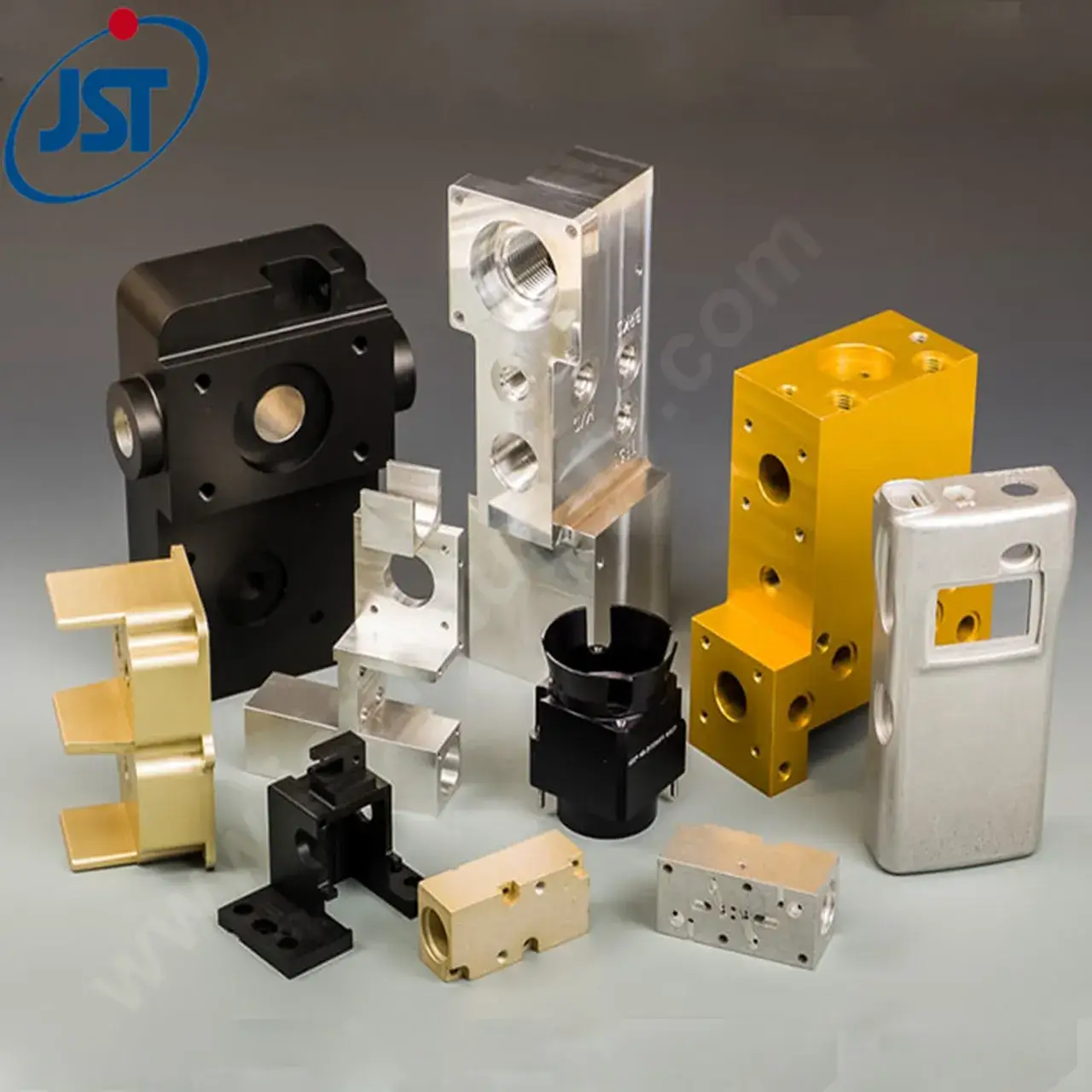
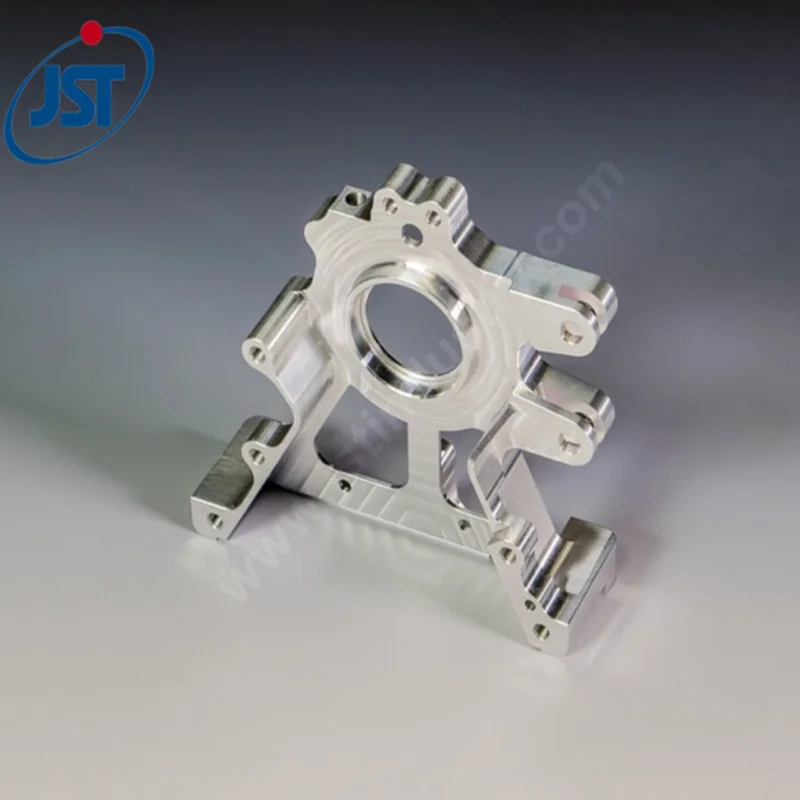
  • CNC Milled & Turned Parts: We machine high-tolerance components such as complex housings, brackets, shafts, sleeves, and connectors from various materials, ensuring precise fits and functionality.

  • Parts from Turning-Milling Compound Machining: Ideal for complex, high-value components like precision shafts with off-center features, valve bodies, and multi-faced fittings. This technology consolidates operations, ensuring exceptional accuracy and faster turnaround for batch production of non-standard parts.

  • Parts from Precision Grinding: We deliver parts requiring the highest level of flatness, roundness, or surface finish. This includes gauge blocks, precision spacers, hydraulic components, and optical mounts, where tolerances are held within microns.

  • Micro-Machined Parts: A specialty for the medical and electronics sectors. We produce tiny, intricate components such as surgical tool tips, micro-fluidic devices, sensor housings, and miniature connectors, where extreme precision on a minuscule scale is critical.

cnc milling Parts

Precision CNC Machining Parts Samples

التطبيق

The applications for precision CNC milling parts are nearly limitless. From aerospace and automotive to medical and consumer electronics, see how our expertise has been applied across industries—and imagine how we can help bring your design to life.

Industrial Manufacturing

Pump housings, gear blanks, rollers, machine spindles.

السيارات

Transmission shafts, pistons, bushings, custom fasteners.

الأجهزة الطبية

Precision implant prototypes, surgical instrument assemblies, housing units.

Telecommunications & Electronics

Waveguides, connectors, heat sinks, insulators.

Help Center

الأسئلة الشائعة

Q: What are your standard tolerances for CNC milling services?

A: We routinely hold standard tolerances of ±0.005 inches (±0.127 mm) for machining, with even tighter tolerances achievable based on part geometry and material. We will review your drawings to confirm feasibility and recommend the most efficient approach to meet your specifications.

A: We prefer 3D solid models in STEP or IGES format, along with 2D drawings in PDF or DWG format that clearly specify critical dimensions, tolerances, material, and finish requirements. This ensures an accurate and rapid quotation process.

A: Absolutely. Our flexible manufacturing setup and workflow are designed to efficiently manage projects of all volumes, from single prototype pieces to long-run production batches, ensuring consistent quality throughout.

A: Quality is integral at every stage. We employ a First Article Inspection (FAI) process and utilize precision measuring equipment, including CMMs, calipers, and surface testers, for in-process and final inspections. Detailed inspection reports can be provided to certify part conformity.

A: Lead times vary based on part complexity, quantity, and current shop schedule. Generally, prototypes can be delivered in as little as 1-2 weeks, while production timelines will be quoted accordingly. We prioritize clear communication of timelines upfront and throughout your project.

Guides You Might Need

تواصل معنا للاستفسار

اتصل بنا

واتساب:

+86-18915758793

البريد الإلكتروني

تليفون

+86-18915758793

arAR

نموذج الاتصال

يرحب فريق JST باستفساراتك.